
Staff Augmentation for Startups: A Guide for US Founders
Staff augmentation for startups works best when a company already has technical leadership and a functioning development process but needs more engineering capacity or specialist skills. External engineers join the existing team, while the startup keeps control of its roadmap, architecture, priorities, product decisions, and day to day engineering direction.
What Is Staff Augmentation for Startups and What Does Your Team Still Control?
Staff augmentation for startups is an engagement model in which external software engineers work as part of an existing product team rather than taking ownership of the entire project. The startup directs the work, decides what gets built, controls technical priorities, and integrates the engineers into its normal development process.
This distinction matters because staff augmentation is not simply another term for software outsourcing.
Consider a SaaS startup with a CTO, three full stack engineers, and a product designer. The team has a working product and established architecture, but an upcoming mobile release requires a React Native engineer and additional QA automation capacity.
The company could recruit both roles permanently. It could also give the mobile project to an outside development company. Staff augmentation offers a third option: add the required engineers to the existing team while keeping engineering ownership inside the startup.
The external engineers may join the same Slack channels, Jira or Linear workspace, GitHub repositories, sprint planning meetings, standups, pull request process, and engineering discussions as internal developers.
The division of responsibility typically looks more like this:
| Responsibility | Startup | Augmentation partner |
|---|---|---|
| Product roadmap | Owns | Supports |
| Architecture decisions | Owns | Contributes |
| Sprint priorities | Owns | Follows |
| Engineer sourcing | Defines requirements | Leads sourcing |
| Technical selection | Interviews and approves | Screens and presents |
| Code review standards | Defines | Follows |
| Day to day engineering direction | Leads | Supports |
| Employment administration | Limited | Usually handles |
| Replacement support | Approves | Coordinates |
| Knowledge transfer | Shared | Shared |
This is why the model suits companies that already know how they want software development to operate.
A staff augmentation provider can remove much of the sourcing and resource administration burden. It cannot replace missing product leadership, unclear architecture, weak requirements, or absent engineering management.
That difference should shape the buying decision.
If your CTO needs two additional engineers to increase delivery capacity, augmentation may fit naturally. If nobody inside the company can decide what those engineers should build or how their work should be reviewed, adding people alone will rarely solve the underlying problem.
Control is therefore one of the model’s strongest advantages, but also one of its requirements. The startup keeps ownership because it remains responsible for directing the engineering work.
For a team specific staffing discussion, request a quote from EmporionSoft or contact EmporionSoft.
Why Do US Startups Reach an Engineering Capacity Gap So Quickly?
US startups often reach an engineering capacity gap because product demand can change faster than a permanent team can expand. Funding, customer commitments, new platforms, integrations, enterprise requirements, infrastructure work, and specialist technical needs can all create more development work without immediately creating the right internal capacity to deliver it.
The problem is not always that the startup has hired poorly or planned badly. Growth itself creates uneven demand.
A seed stage company may spend months with four engineers working effectively against a focused roadmap. A funding round, large customer opportunity, or product expansion can suddenly introduce mobile development, analytics, DevOps, integrations, AI functionality, security work, or automated testing.
Those capabilities may not exist inside the current team.
Permanent recruitment remains appropriate for durable core roles, but it carries a substantial commitment. The US Bureau of Labor Statistics software developer outlook reports that the median annual wage for software developers was $133,080 in May 2024. It also projects software developer employment to grow 16 percent from 2024 to 2034.
That does not mean every startup should move development offshore or avoid hiring permanent engineers. It means software talent is a material investment, and founders should distinguish between a permanent organisational need and a temporary or specialist capacity problem.
Several situations create that distinction.
A product launch may require extra QA engineers for four months. A React web team may need one experienced React Native developer for a mobile application. A SaaS company preparing for enterprise customers may need DevOps and security expertise sooner than it expected.
A backlog can also expose the gap.
When core engineers spend most of their time maintaining existing functionality, addressing incidents, reviewing pull requests, and supporting customers, new roadmap work starts slipping even though the team remains busy.
Adding more work to the same people usually creates context switching rather than more capacity.
Specialisation adds another constraint. A strong backend developer is not automatically the right person to design mobile architecture, build an infrastructure pipeline, implement an ML system, or establish automated test coverage.
Startups therefore need to ask a more precise question than, “Do we need more developers?”
They need to determine which capability is constrained, how long the constraint is likely to last, and whether that capability should become a permanent part of the company.
That diagnosis is what makes staff augmentation useful. It gives engineering leaders another capacity option without forcing every new technical requirement into a permanent hiring decision.
If your roadmap has outgrown current engineering capacity, request a quote for additional engineers or contact EmporionSoft about your requirements.
When Should a Startup Use Staff Augmentation, and When Should It Choose Another Model?
A startup should use staff augmentation when it already has enough technical leadership to manage delivery but lacks the capacity or specialist expertise required by its roadmap. It should consider another model when it needs a partner to own the project, define the technical approach, manage delivery independently, or solve an unclear product problem.
The best trigger is therefore not company size. It is the type of gap the business needs to close.
Strong use cases for staff augmentation
1. The roadmap exceeds current capacity
Your engineers know what needs to be built, but the team cannot deliver the planned workload within an acceptable timeframe.
Adding qualified engineers can increase available execution capacity without restructuring the entire development operation.
2. You need a specific technical skill
A startup may need React Native, Flutter, Python, DevOps, cloud engineering, QA automation, AI engineering, frontend development, or a particular backend framework for a defined part of the roadmap.
Hiring every specialist permanently rarely makes sense for a young company.
3. You have raised funding and need controlled expansion
Funding can increase expectations immediately. The product roadmap expands, customer acquisition accelerates, and leadership wants engineering capacity to keep pace.
Augmentation can provide an intermediate option while the company determines which roles should eventually become permanent.
4. A key engineer has left
Replacing a senior developer properly may take time. Temporary external capacity can protect delivery while the company searches for the right long term hire.
5. A product release creates temporary demand
Launches often increase pressure across development, QA, integrations, mobile, infrastructure, and deployment.
That spike may not justify the same headcount six months later.
6. Your existing team needs additional hands, not another management layer
This is the clearest fit.
The CTO or engineering lead already controls architecture, tickets, code review, releases, and priorities. The immediate requirement is execution capacity.
When another model may be better
Staff augmentation becomes less attractive when the company has no internal technical ownership.
If a founder has an idea but no CTO, no engineering manager, no architecture, and no development process, giving them three individual engineers still leaves major delivery questions unanswered.
A managed development engagement may be more appropriate because the provider can take broader responsibility for planning, architecture, delivery coordination, and technical execution.
Permanent hiring may also be better for leadership positions, deep institutional knowledge, strategically critical domain expertise, or roles expected to remain central for many years.
Freelancers can work well for isolated tasks with limited coordination needs.
The practical decision rule is simple: use augmentation when the problem is capacity or specialist access. Choose a broader delivery model when the problem is ownership, management, or product definition.
That distinction prevents startups from buying the wrong operating model simply because one option appears quicker.
To discuss whether augmentation fits your current team structure, request a quote or contact EmporionSoft.
What Risks Should Startups Control Before Adding External Engineers?
Staff augmentation risks are manageable when they are treated as engineering and governance problems rather than ignored as vendor issues. The main risks involve technical fit, weak onboarding, security access, communication, knowledge concentration, code quality, time zone coordination, and dependence on external engineers without sufficient internal ownership.
The first risk is technical mismatch.
A CV can show years of experience without proving that an engineer can work effectively in your particular codebase. The startup should interview proposed engineers directly, use technical discussions relevant to the actual role, and evaluate how candidates reason about production software rather than relying only on provider screening.
The second risk is poor onboarding.
External engineers need the same architectural context that internal developers need. Giving someone repository access and a Jira ticket is not onboarding.
A practical onboarding package should cover:
- system architecture
- local development setup
- coding standards
- branch and pull request rules
- testing expectations
- release workflow
- key domain concepts
- ownership boundaries
- communication expectations
Security requires equal discipline.
External engineers may need access to source code, staging systems, cloud environments, customer data, or internal documentation. Access should follow the principle of minimum necessary privilege rather than granting broad permissions for convenience.
The NIST Secure Software Development Framework recommends integrating secure development practices into the software lifecycle and notes that software purchasers can use a common security framework when communicating requirements to suppliers.
That has a direct implication for augmentation. Security requirements should form part of onboarding and engineering operations, not appear only in the commercial contract.
Knowledge concentration is another risk.
If one augmented engineer becomes the only person who understands a payment integration, deployment process, or critical service, the company has created a dependency.
Reduce it through documentation, internal code review, shared ownership, architecture notes, pairing, and planned handover.
Time zone differences also need deliberate management, particularly between the United States and Pakistan.
A distributed team does not require everyone to work the same hours. It does require defined overlap for decisions, predictable response expectations, clear asynchronous communication, and a process for issues that cannot wait until the next scheduled meeting.
The final risk is cultural separation.
Calling external engineers “the vendor team” while excluding them from technical discussions often produces exactly the fragmented delivery the company wants to avoid.
If engineers are expected to augment the team, they should receive the context needed to contribute as part of that team.
The goal is not to remove every risk. It is to design controls so that external capacity does not weaken engineering standards.
For help structuring an augmentation engagement around your security and engineering process, request a quote or contact EmporionSoft.
Staff Augmentation vs Full Time Hiring, Freelancers, Dedicated Teams, and Outsourcing
Staff augmentation sits between individual contracting and broader software outsourcing. It provides engineers who integrate into the client’s team, while permanent hiring builds internal headcount, freelancers usually operate independently, dedicated teams create a larger external unit, and outsourcing transfers more responsibility for delivering a defined project or outcome to the provider.
The right choice depends on what the startup wants to retain internally.
| Factor | Staff augmentation | Full time hiring | Freelancer | Dedicated team | Software outsourcing |
|---|---|---|---|---|---|
| Day to day management | Client | Client | Varies | Shared or provider led | Usually provider led |
| Product control | High | High | High | High to shared | Shared |
| Engineering integration | High | Highest | Varies | Moderate to high | Often lower |
| Commitment | Flexible | High | Flexible | Medium to high | Project dependent |
| Specialist access | Strong | Requires hiring | Strong for specific tasks | Strong | Strong |
| Scaling capacity | Relatively flexible | Requires recruitment | Individual capacity | Team based | Scope based |
| Best fit | Existing team needs capacity | Durable core roles | Defined independent work | Ongoing external team | Delivery ownership |
Staff augmentation vs full time hiring
Permanent employees make sense when a role represents a durable part of the company’s future organisation.
A senior engineering leader, core platform owner, or developer with deep product and domain responsibility may provide more long term value as an internal employee.
Augmentation is better suited to situations where the startup needs capacity sooner, needs a specialised role, or does not yet know whether the requirement should become permanent.
Staff augmentation vs freelancers
Freelancers can be effective for contained tasks.
The difference becomes more visible when the engineer must participate in ongoing product development. Staff augmentation usually includes provider support around sourcing, vetting, continuity, and replacement, while a freelancer relationship is generally centred on one individual.
Neither model is universally better.
Staff augmentation vs dedicated development teams
A dedicated team generally creates a more complete external engineering unit. It may contain developers, QA engineers, designers, technical leadership, or delivery management working together over a longer engagement.
Augmentation is narrower. It adds capacity into a team the startup already operates.
Staff augmentation vs outsourcing
Outsourcing transfers more delivery responsibility.
If you want a vendor to take a defined product or project, organise the development team, manage execution, and deliver against an agreed scope, outsourcing may fit better.
If your CTO wants two engineers inside the existing sprint process, augmentation is usually the cleaner model.
US companies should also review the legal and tax structure of any workforce arrangement. The IRS guidance on employee and independent contractor classification explains that classification depends on the actual relationship, including control, financial factors, and the type of relationship. Specific arrangements should be reviewed with qualified legal and tax professionals.
To compare engagement models for your product, request a quote or contact EmporionSoft.
How Much Does Staff Augmentation Cost and How Should Founders Compare Value?
Staff augmentation cost depends on the role, seniority, technology, location, working arrangement, engagement duration, and level of expertise required. Founders should compare more than hourly rates. The useful question is how much productive engineering capacity the engagement creates after management effort, onboarding, communication, continuity, and replacement risk are considered.
A senior backend engineer working on financial infrastructure should not be priced or evaluated in the same way as a junior frontend developer supporting a well defined interface backlog.
The same applies to specialised expertise.
AI engineering, DevOps, cloud architecture, security, mobile development, QA automation, and complex backend systems may require different experience levels and market rates.
Rather than searching for one universal staff augmentation rate, founders should define the requirement first:
- role and primary responsibilities
- required technology stack
- expected seniority
- duration
- weekly allocation
- required working hour overlap
- domain experience
- communication responsibilities
- whether the role is execution focused or architecture heavy
Then compare providers against the same requirement.
Hourly cost is only one part of value
Suppose Provider A quotes a lower rate but requires substantial management, delivers inconsistent availability, and cannot replace an engineer quickly if the fit is wrong.
Provider B costs more per hour but provides stronger vetting, better continuity, predictable availability, and engineers who become productive inside the existing workflow.
The cheaper rate may not produce the lower effective cost.
Founders should evaluate at least five dimensions:
- Productive capacity: How much useful engineering work is actually completed?
- Management overhead: How much time does your CTO spend correcting avoidable problems?
- Continuity: What happens when an engineer becomes unavailable?
- Quality: Does additional capacity increase or reduce future technical debt?
- Flexibility: Can capacity change as the roadmap changes?
Permanent hiring creates a different cost profile. Salary is only one component. Recruiting effort, benefits, payroll administration, equipment, onboarding, retention, and the organisational commitment of adding headcount also matter.
That does not make permanent hiring expensive by definition. It makes the comparison more complex than contractor rate versus salary.
The strongest financial case for augmentation appears when a startup has a defined engineering requirement but does not need the same role as permanent headcount.
A three month specialist gap, additional release capacity, or temporary mobile engineering requirement is economically different from a core engineering position expected to remain essential for years.
Pricing should follow that distinction.
A credible provider should also explain what the commercial rate includes, what happens if the engineer is not the right fit, how notice works, and whether management or replacement support creates additional charges.
For pricing based on your required roles and seniority, request a quote from EmporionSoft or contact EmporionSoft.
How Should a US Startup Choose, Onboard, and Manage a Staff Augmentation Partner?
A US startup should choose a staff augmentation partner by evaluating the actual engineers, the provider’s vetting process, security controls, communication model, replacement process, and ability to integrate with the existing development workflow. After selection, onboarding and management should mirror the standards used for internal engineers rather than creating a separate external delivery process.
Start with the requirement, not the vendor shortlist.
A useful selection process looks like this:
- Define the engineering gap. Specify the role, seniority, stack, responsibilities, duration, expected availability, and time zone overlap.
- Review matched profiles. Reject generic CV batches that do not clearly map to the requirement.
- Interview engineers directly. Test technical judgement, communication, and product thinking.
- Confirm engagement responsibilities. Establish who manages work, performance, replacement, and administration.
- Agree security requirements. Define repository, infrastructure, data, and documentation access.
- Onboard into the existing workflow. Use the same sprint, review, testing, and release process as the internal team.
- Review performance early. Look for delivery quality, communication, ownership, and ability to operate with appropriate independence.
Provider due diligence should include security as well as technical capability.
The NIST Cybersecurity Framework 2.0 supply chain risk management guide advises organisations acquiring technology products and services to define and communicate supplier requirements as part of supply chain risk management.
For a startup, that translates into practical questions.
Who can access production? How are credentials managed? Are personal devices permitted? What happens when an engineer leaves the engagement? Are access rights removed immediately? What secure development practices must be followed?
Do not leave these decisions implicit.
Interview the engineers, not only the provider
The provider relationship matters, but the people entering your repository matter more.
Ask candidates to explain architectural decisions they have made, production problems they have solved, how they review code, how they test changes, and what they do when requirements are unclear.
Communication quality is equally important.
A technically strong developer who cannot surface blockers or explain tradeoffs can create significant coordination cost inside a distributed team.
Build an onboarding runway
Start new engineers with context before assigning a critical production feature.
Give them architecture documentation, development environment instructions, representative tickets, access to the people who understand the system, and clear expectations for pull requests and testing.
Early work should allow both sides to verify the fit.
Manage outcomes, not activity
Remote augmentation works better when teams have clear ownership, deliverables, acceptance criteria, review processes, and communication expectations.
Measuring keyboard activity or requiring constant visible presence does not substitute for engineering management.
The aim is to create engineers who can operate inside the startup’s product system with progressively less supervision while remaining accountable to the same standards as the internal team.
To review suitable engineers for your stack, request a quote or contact EmporionSoft.
Should US Startups Use Staff Augmentation From Pakistan as They Scale?
Pakistan can be a practical staff augmentation location for US startups when the provider can demonstrate strong engineering capability, communication, security discipline, and a workable collaboration model. The business case should be based on access to technical talent and sustainable engineering economics, not on treating offshore development as a search for the lowest possible labour rate.
Pakistan has a substantial export oriented technology sector.
According to the Pakistan Software Export Board report on FY2024 to FY2025 technology exports, Pakistan’s IT and IT enabled services exports reached $3.8 billion during that fiscal year.
For a US founder, however, national export figures do not determine whether a particular engineer or provider will succeed.
The provider still has to earn the decision.
What founders should evaluate
Engineering quality
Ask for profiles that match the actual stack and seniority requirement. Interview the engineers. Review relevant product experience. Evaluate problem solving and communication rather than relying on location based assumptions.
Working hour expectations
Pakistan and the United States do not share a natural full workday overlap.
A good operating model defines the overlap that actually matters, such as standups, technical discussions, sprint ceremonies, incident escalation, and product decisions. The remaining work can happen asynchronously when documentation and communication are strong.
Security and confidentiality
Access should reflect the sensitivity of the system.
A developer working on a public marketing site may need a different control model from an engineer working with healthcare, financial, identity, or sensitive customer data.
Contracts, access policies, secure development standards, and offboarding procedures should match the risk.
Engineering economics
Pakistan can offer different cost structures from major US technology markets, but rate differences should not become the entire buying argument.
The better question is whether the arrangement gives the startup capable engineers, predictable delivery, manageable coordination overhead, and the flexibility to scale without weakening technical quality.
An illustrative SaaS example
Consider a US SaaS company with:
- one CTO
- three full stack developers
- one product designer
- an established web product
- a mobile application scheduled for a future release
The internal engineers understand the domain and backend architecture, but none has deep React Native experience. The team also lacks enough QA automation capacity to support the release safely.
The company could begin two permanent searches.
It could outsource the entire mobile application.
Or it could augment the existing team with one senior React Native engineer and one QA automation engineer.
In the augmentation model, the CTO still decides architecture. The existing engineers continue owning backend services. The augmented mobile engineer joins sprint planning and works against the same repositories and product requirements.
The QA engineer builds automated coverage and participates in the release process.
When the mobile release stabilises, the startup can evaluate what capacity it needs next rather than assuming both external roles must become permanent headcount.
That is the practical value of the model. It creates flexibility without separating product ownership from the startup.
Where EmporionSoft fits
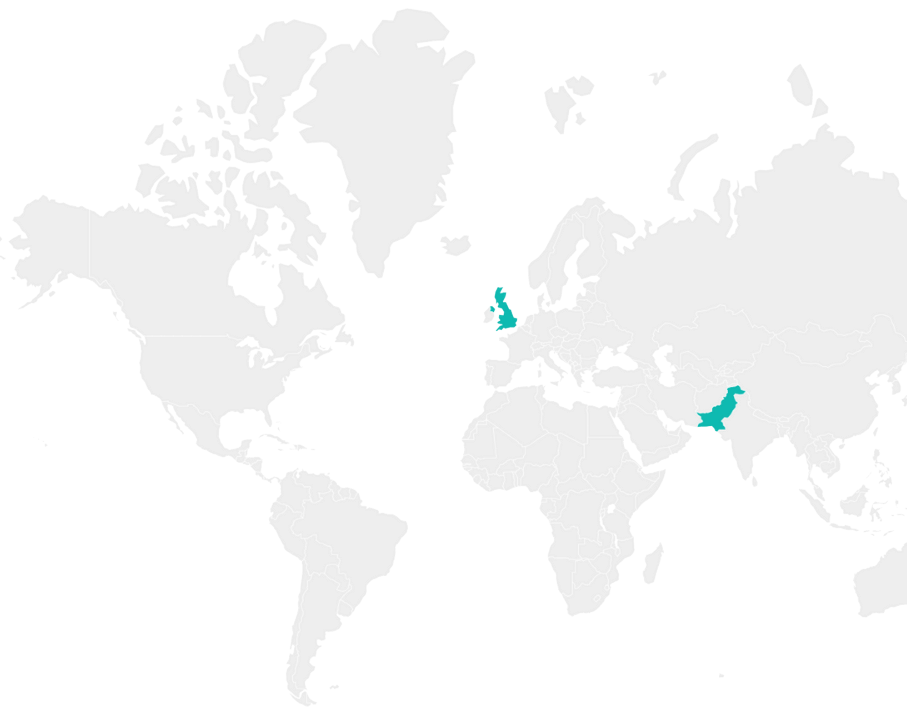
EmporionSoft operates as a software development and technology consultancy serving startups, SMEs, and enterprises, with engineering operations in Pakistan and a UK presence.
For staff augmentation, the relevant proposition is straightforward: add engineers to an existing client team rather than asking the client to surrender control of its product.
A founder should still apply the same evaluation discipline discussed throughout this guide. Define the role. Review the proposed engineers. Interview them. Confirm the management model. Agree working hours. Establish security requirements. Define how performance and replacement will work.
A capable partner should be comfortable with that scrutiny.
Staff augmentation is strongest when both sides are clear about what it is designed to solve.
It is not a substitute for a CTO.
It is not automatically a cheaper version of permanent employment.
It is not the same as giving an entire software project to an outside company.
It is a way to add engineering capacity and specialised capability to a team that already knows where its product needs to go.
For startups facing that specific problem, the model can provide a useful middle ground between slow organisational expansion and transferring delivery outside the company.
If you know the roles or technologies your team needs, request a quote and discuss suitable engineer profiles or contact EmporionSoft directly.
Frequently Asked Questions
What is staff augmentation for startups?
Staff augmentation for startups means adding external engineers to an existing development team while the startup continues managing the roadmap, priorities, architecture, and day to day work. The provider typically supports sourcing and resource administration, while the client integrates the engineers into its own engineering workflow.
Is staff augmentation good for early stage startups?
It can be, provided the startup already has enough technical leadership to direct engineering work. A startup without a CTO, technical lead, defined product requirements, or development process may benefit more from a managed software development model where the provider assumes greater responsibility for delivery.
How is staff augmentation different from outsourcing?
Staff augmentation adds people to your existing engineering operation. Your company usually manages their tasks, priorities, and technical work. Outsourcing typically gives the external provider more responsibility for delivering a defined project, product, or outcome. The correct choice depends primarily on how much delivery ownership you want to retain.
Can a US startup hire just one augmented developer?
Yes. Staff augmentation does not require creating a large offshore team. A startup can use the model for one specialist engineer, several developers, QA capacity, mobile expertise, or another defined technical gap. The important requirement is that the role can be integrated effectively into the existing team and development process.
Can US startups hire software developers from Pakistan?
Yes, but location alone should not determine the decision. US startups should evaluate Pakistani engineers using the same standards they would apply elsewhere: technical capability, communication, security, product experience, working hour expectations, code quality, and contractual structure. The strongest case combines suitable engineering talent with a disciplined collaboration model.