
AI Adoption in Pakistan: A Digital Shift Gaining Serious Momentum
AI adoption in Pakistan is no longer a future concept—it is unfolding right now. Across cities like Karachi, Lahore, and Islamabad, businesses are quietly embedding artificial intelligence into daily operations. From automating customer support to analysing market behaviour, AI is becoming a practical growth tool rather than a buzzword.
Pakistan’s digital economy is expanding fast. Internet penetration, cloud access, and mobile usage have reached a tipping point. This shift has created fertile ground for AI-powered solutions. What makes this moment unique is that adoption is not limited to large enterprises. SMEs and startups are leading much of the experimentation.
Artificial intelligence is now seen as a way to scale efficiently, compete globally, and reduce operational friction. This mindset marks a clear turning point in how technology is perceived across the country.
What AI Adoption Means for Local Businesses, SMEs, and Startups
Moving Beyond Automation to Intelligence
Artificial intelligence implementation in Pakistan goes beyond basic automation. Local businesses are using AI to make smarter decisions. Predictive analytics, recommendation engines, and intelligent chatbots are becoming common tools.
For SMEs, AI adoption often starts small. Customer service bots, demand forecasting, and marketing automation are typical entry points. These tools help businesses do more with limited teams and budgets.
Startups are even more aggressive. Many Pakistani startups are building AI directly into their products. This allows them to target international markets while operating locally. The cost advantage plays a major role here.
As highlighted in EmporionSoft’s technology insights, AI is increasingly treated as a core capability rather than an optional upgrade
👉 https://emporionsoft.com/our-insights/
Current AI Adoption Trends in Pakistan
Where Adoption Is Happening Fastest
AI adoption trends in Pakistan show clear sectoral patterns. Technology, fintech, e-commerce, and logistics are early leaders. These sectors already rely on data, making AI integration more natural.
Common use cases include:
-
Customer behaviour analysis
-
Fraud detection and risk scoring
-
Personalised digital marketing
-
Process optimisation through machine learning
Cloud-based AI services have lowered entry barriers. Businesses no longer need heavy infrastructure investments. This shift has accelerated AI growth in Pakistan, especially among small and mid-sized firms.
According to the McKinsey Global Institute, companies that adopt AI early tend to outperform peers on productivity and profitability, particularly in emerging markets
AI Readiness in Pakistan vs Global Markets
A Growing Gap, But a Closing One
AI readiness Pakistan still trails developed economies like the US and EU. Data maturity, advanced research output, and large-scale enterprise adoption remain limited. However, the gap is narrowing.
Key strengths include a young workforce, strong software development talent, and competitive costs. Pakistan produces thousands of IT graduates each year. Many are already working with AI frameworks and cloud platforms.
Challenges remain around data quality, governance, and advanced research funding. Yet, compared to other emerging markets, Pakistan shows strong upward momentum.
Global benchmarks such as the Stanford AI Index consistently highlight talent availability as a critical enabler for AI growth in developing economies
Inside the Pakistan AI Ecosystem
Startups, Universities, IT Firms, and Government Push
The Pakistan AI ecosystem is built on multiple pillars working in parallel. Startups are driving applied innovation. Universities are expanding AI-focused curricula and research labs. IT firms are delivering AI-enabled solutions for local and international clients.
Government initiatives are also shaping the landscape. Digital Pakistan policies, incubation centres, and technology parks support innovation and skills development. While still evolving, these efforts signal long-term intent.
Private software companies play a critical bridging role. Firms like EmporionSoft help businesses translate AI concepts into deployable systems, aligning technology with real operational needs
👉 https://emporionsoft.com/
How SMEs and Startups Are Using AI to Compete Beyond Borders
Small businesses in Pakistan are no longer limited by geography. With the right AI tools, a five-person team in Lahore can now compete with global players. This shift explains why AI adoption in SMEs Pakistan is accelerating faster than many expect.
For many founders, AI is not about experimentation. It is about survival, speed, and scale. The focus is practical: reduce costs, reach customers faster, and make smarter decisions with limited resources.
This mindset is reshaping how SMEs and startups approach growth.
AI for Small Business Pakistan: Practical, Focused, and ROI-Driven
Using AI Where It Matters Most
AI for small business Pakistan typically begins with customer-facing functions. Marketing, sales, and operations offer quick returns with minimal disruption.
Common applications include AI-powered CRM systems that prioritise leads automatically. Marketing teams use AI to optimise ad spend and personalise campaigns. Chatbots now handle routine queries without human intervention.
Automation tools also play a major role. Invoicing, inventory alerts, and workflow management are increasingly handled by intelligent systems. This reduces manual work and error rates.
Many of these solutions are cloud-based, making adoption easier for non-technical teams. As highlighted in EmporionSoft’s service portfolio, AI integration is often layered onto existing systems rather than replacing them
👉 https://emporionsoft.com/services/
AI in Pakistani Startups: Speed, Scale, and Cost Efficiency
Building AI Into the Product Itself
AI in Pakistani startups goes beyond operational efficiency. Many startups embed AI directly into their core products. This allows them to deliver smarter features without increasing headcount.
Startups use AI to analyse user behaviour in real time. Recommendation engines, predictive analytics, and dynamic pricing models are common. These capabilities help startups iterate faster and scale without heavy infrastructure costs.
Cost reduction is a major driver. AI enables lean teams to manage tasks that once required entire departments. This creates a strong competitive edge, especially in international markets.
Case studies from Pakistani tech firms show that early AI adoption often shortens time-to-market significantly
👉 https://emporionsoft.com/case-studies/
Common AI Tools Used by Pakistani SMEs
Tools That Lower the Barrier to Entry
Pakistani SMEs rarely build AI systems from scratch. Instead, they rely on proven tools and platforms that offer quick deployment.
Popular categories include:
-
AI-driven CRM and sales automation tools
-
Marketing analytics and ad optimisation platforms
-
Customer support chatbots with natural language processing
-
Business intelligence dashboards with predictive insights
These tools support a clear AI strategy Pakistan businesses can adopt incrementally. Start small, validate impact, then scale usage across departments.
According to the McKinsey Global Institute AI adoption survey, SMEs that adopt AI in targeted functions often see faster productivity gains than those attempting full-scale transformation at once
Industry-Wise AI Adoption in Pakistan: One Technology, Very Different Impacts
AI adoption in Pakistan is not uniform. Each industry applies artificial intelligence in ways shaped by its data, risks, and operational realities. What works in agriculture looks very different from what succeeds in banking or healthcare. This sector-specific transformation is where AI delivers its real value.
From farms and hospitals to financial institutions, AI is solving deeply local problems with measurable outcomes.
AI in Agriculture Pakistan: Data-Driven Farming at Scale
AI in agriculture Pakistan is gaining traction as food security and climate pressure intensify. Farmers and agribusinesses are increasingly turning to data to improve yields and reduce waste.
One of the most impactful use cases is precision farming. AI models analyse satellite imagery, soil data, and weather patterns to guide irrigation and fertiliser use. This helps farmers optimise inputs while protecting crops.
AI is also used to detect crop diseases early through image recognition. Mobile-based solutions allow farmers to identify issues before damage spreads. These systems are especially valuable in rural areas with limited access to agronomists.
According to the Food and Agriculture Organization (FAO), AI-enabled agriculture can significantly improve productivity in developing economies by reducing resource inefficiencies and climate risk exposure.
AI in Healthcare Pakistan: Faster, Smarter Clinical Decisions
AI in healthcare Pakistan focuses on improving access, accuracy, and efficiency. With growing patient loads and limited specialist availability, AI offers practical support to healthcare providers.
One key application is medical diagnostics. AI systems assist doctors by analysing radiology images, pathology slides, and patient records. These tools help flag anomalies early, reducing diagnostic delays.
AI is also improving hospital operations. Predictive models help manage patient flow, optimise staffing, and forecast demand. This operational intelligence is becoming essential in urban hospitals.
As AI moves from pilots to production, real-time data processing becomes critical. Many healthcare platforms rely on production-grade AI pipelines similar to those described in modern software environments
👉 https://emporionsoft.com/real-time-ai-in-production/
The World Health Organization (WHO) has highlighted AI’s potential to strengthen health systems, particularly in countries facing workforce and infrastructure constraints.
AI in Finance Pakistan and AI Adoption in Banking
AI in finance Pakistan is one of the most mature adoption areas. Banks, fintechs, and payment platforms rely heavily on data, making AI integration both natural and necessary.
The most common use cases include fraud detection and credit scoring. Machine learning models analyse transaction patterns in real time to flag suspicious activity. This improves security while reducing false positives.
Credit scoring models powered by AI assess risk using alternative data. This enables financial inclusion for customers with limited credit history. AI adoption in banking also supports personalised financial products and automated customer service.
Behind these capabilities lies strong software architecture. Scalable AI systems require robust engineering foundations, as explored in modern AI-driven development practices
👉 https://emporionsoft.com/how-ai-is-revolutionizing-software-development/
The State Bank of Pakistan has repeatedly emphasised the role of advanced analytics and AI in strengthening financial stability and digital banking innovation.
AI Adoption Challenges in Pakistan: The Barriers Slowing Real Progress
AI adoption in Pakistan is advancing, but not without friction. While interest is high, real-world implementation often stalls due to structural and operational barriers. These AI adoption challenges Pakistan faces are practical, not theoretical, and they affect businesses of all sizes.
Understanding these constraints is essential to evaluating where AI can realistically deliver value today.
Core AI Adoption Barriers Pakistan Faces
Several challenges to adopting AI consistently appear across industries. These barriers slow experimentation and limit long-term scalability.
Key obstacles include:
-
Limited access to clean, structured, and reliable data
-
Fragmented digital systems across departments
-
High dependency on imported AI tools and platforms
-
Unclear data governance and compliance frameworks
Many organisations still struggle with legacy systems. Technical debt makes it harder to integrate AI into existing workflows without disruption
👉 https://emporionsoft.com/technical-debt-explained-identify-manage-eliminate/
These foundational issues often delay AI projects before they reach meaningful deployment.
Skills Gap and AI Readiness in Pakistan
The skills gap remains one of the most cited AI adoption barriers Pakistan-wide. While Pakistan produces strong software engineers, advanced AI expertise is still limited.
AI readiness Pakistan varies sharply between organisations. Large firms may access specialised talent, but SMEs often rely on generalist developers. This limits the sophistication of AI use cases they can support.
There is also a gap between business leaders and technical teams. Decision-makers may not fully understand AI capabilities or limitations. This misalignment leads to unrealistic expectations or underutilised systems.
According to the World Bank, emerging economies often face AI readiness challenges due to talent concentration and uneven access to advanced digital skills
Data Quality and Infrastructure Constraints
AI systems are only as effective as the data they consume. In Pakistan, data quality remains a persistent challenge.
Common data-related issues include:
-
Inconsistent data collection practices
-
Siloed databases across teams
-
Limited historical data for model training
-
Weak cybersecurity and data protection controls
Infrastructure also plays a role. While cloud adoption is rising, connectivity and latency issues still affect real-time AI workloads in some regions.
Ethical concerns further complicate adoption. Without strong governance, businesses risk misuse of data or biased AI outcomes
👉 https://emporionsoft.com/ethics-in-ai/
Difficulty to Adopt AI in Education
The difficulty to adopt AI in education directly impacts long-term AI maturity. Universities and training institutes are still catching up with industry needs.
Many curricula focus on theory rather than applied AI. Access to real datasets, production environments, and modern tooling is limited. This slows the development of job-ready AI professionals.
As a result, businesses often need to invest heavily in on-the-job training. This increases costs and delays project timelines.
AI Policy and Enterprise Readiness in Pakistan: When Regulation Shapes Innovation
Regulation does not slow innovation when done right. It defines the rules that allow innovation to scale safely. In Pakistan, the evolving AI policy framework Pakistan is beginning to influence how enterprises plan, invest, and deploy artificial intelligence.
Policy direction and enterprise readiness are now tightly linked. Businesses that understand this connection are moving faster and with fewer risks.
Pakistan’s AI Policy Direction: Still Emerging, Clearly Intentional
Pakistan’s AI policy direction is still in its formative stage. Unlike the EU or the US, the country does not yet have a single, comprehensive AI act. However, multiple digital and technology policies signal growing intent.
Government initiatives focus on digital transformation, data governance, and skills development. These efforts aim to prepare institutions for AI-enabled systems rather than regulate them retroactively.
This flexible approach offers short-term freedom for innovation. At the same time, it creates uncertainty for enterprises planning long-term AI investments. Compared to mature markets, policy clarity remains limited.
Global benchmarks such as the OECD AI Policy Observatory show that countries with clear AI frameworks tend to see faster enterprise adoption and lower compliance friction
AI Strategy Pakistan: How Enterprises Are Preparing
For enterprises, policy gaps place greater responsibility on internal planning. A clear AI strategy Pakistan businesses can follow is becoming essential.
Many organisations now start with governance-first thinking. They define how data is collected, stored, and used before deploying AI models. This reduces risk and improves trust.
Enterprise AI readiness Pakistan depends heavily on architecture maturity. Scalable systems, secure identity layers, and controlled access are foundational. Technologies such as decentralised identity are increasingly relevant in this context
👉 https://emporionsoft.com/decentralized-identity-and-authentication/
Without these foundations, AI initiatives struggle to move beyond pilots.
Public-Private Collaboration in the Pakistan AI Ecosystem
The Pakistan AI ecosystem relies on collaboration more than regulation alone. Universities, private software firms, startups, and government bodies are beginning to work in parallel rather than isolation.
Incubation centres and innovation hubs support early-stage experimentation. Private firms translate research into deployable solutions. This collaboration helps bridge the gap between policy ambition and operational reality.
Enterprise-grade AI also requires mature operational practices. Model monitoring, performance tracking, and lifecycle management are becoming critical as adoption grows. This is where structured approaches like LLMOps play a role in readiness
👉 https://emporionsoft.com/llmops-scaling-monitoring-and-optimising-large-language-models-in-real-world-apps/
In more mature markets, such as the EU, regulation like the AI Act is shaping these practices early. Pakistan’s approach is looser for now, but enterprise responsibility is increasing.
The Next Wave of AI Opportunities in Pakistan: From Local Impact to Global Reach
The next phase of AI adoption in Pakistan will not be defined by experimentation, but by scale. As digital foundations mature, the conversation is shifting from whether to adopt AI to how far it can transform entire business models. These AI opportunities in Pakistan are both ambitious and achievable.
What lies ahead is less about technology novelty and more about strategic execution.
AI for Digital Transformation Pakistan: Moving Beyond Isolated Use Cases
AI for digital transformation Pakistan is becoming an enterprise-wide priority. Businesses are beginning to integrate AI across workflows rather than confining it to single departments.
End-to-end automation, intelligent decision support, and real-time analytics are shaping this shift. AI is increasingly connected to cloud platforms, enabling scalable deployment and rapid iteration.
Cloud-native infrastructure will be a key enabler. As computing moves closer to data sources, AI systems can operate faster and more reliably. This evolution aligns closely with broader trends in cloud architecture
👉 https://emporionsoft.com/future-of-cloud-computing/
The result is smarter organisations that can adapt quickly to market changes.
Export-Driven AI Services: Pakistan’s Global Advantage
One of the strongest AI opportunities in Pakistan lies beyond domestic markets. Pakistani tech firms are well-positioned to deliver AI-powered services internationally.
Cost competitiveness, time-zone alignment with Europe and the Middle East, and a growing talent pool make Pakistan an attractive outsourcing destination. AI-enhanced development, analytics, and automation services are in rising demand.
Many firms are already offering AI-driven solutions as part of broader digital transformation packages. Industry players like https://thecodev.co.uk/ illustrate how regional companies can compete globally with the right technical focus.
This export-oriented model accelerates AI maturity while bringing foreign revenue into the ecosystem.
AI in Logistics, Education, and SaaS: High-Growth Frontiers
Several sectors are emerging as high-growth areas for AI adoption.
In logistics, AI is improving route optimisation, demand forecasting, and warehouse management. These capabilities reduce costs and improve delivery reliability in complex supply chains.
In education, adaptive learning platforms and automated assessment tools are gaining traction. AI can personalise content delivery while supporting educators with performance insights.
SaaS platforms are embedding AI to differentiate products. Features like predictive analytics, intelligent recommendations, and automated workflows are becoming standard expectations.
All of these use cases depend on strong data foundations. Scalable data lakes enable continuous learning and system improvement
👉 https://emporionsoft.com/harnessing-the-power-of-data-lakes-for-scalable-data-driven-software-development/
AI Adoption in Pakistan: From Early Momentum to Sustainable Growth
AI adoption in Pakistan has moved beyond experimentation. SMEs are using AI to compete globally. Startups are building intelligence into their products from day one. Enterprises are embedding AI into core operations to improve efficiency and resilience.
What stands out today is maturity. Businesses are no longer chasing trends. They are making deliberate investments in data, architecture, and governance. This shift signals long-term intent rather than short-term hype.
Across industries, AI is becoming a strategic capability. It supports smarter decisions, faster execution, and scalable growth. As skills improve and infrastructure strengthens, the impact will compound.
The trajectory is clear. Pakistan’s AI journey is entering a phase defined by trust, accountability, and measurable outcomes.
Partnering for AI That Delivers Real Business Value
Turning AI ambition into results requires more than tools. It demands strategy, execution discipline, and experience across markets. This is where the right technology partner makes the difference.
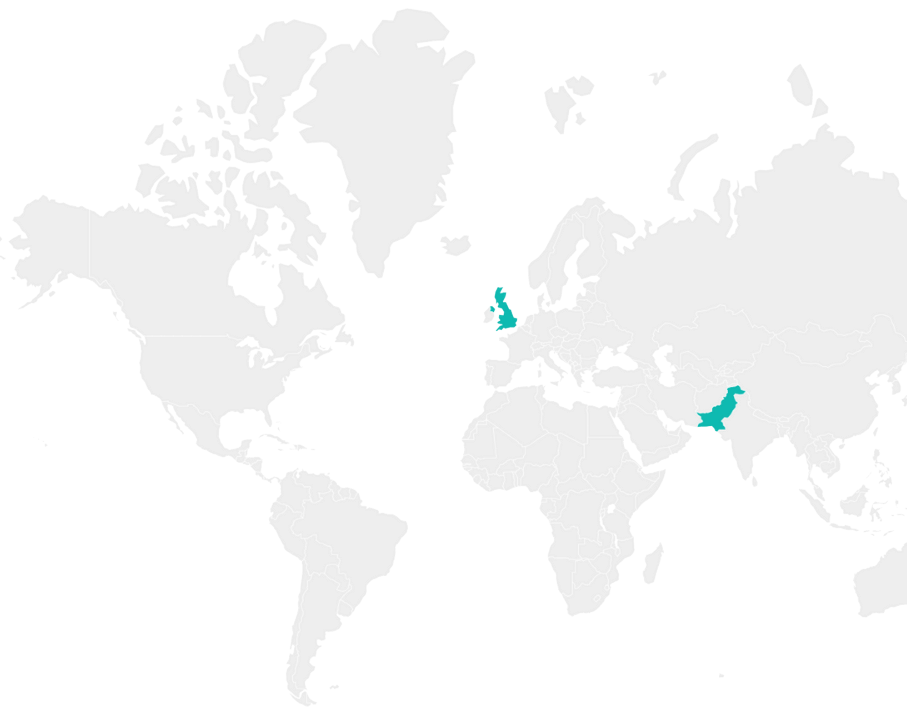
EmporionSoft Pvt Ltd is a UK-based software partner with global delivery experience. The team works with businesses to design AI strategies aligned with real operational goals. From implementation to optimisation, the focus remains on outcomes that scale.
Whether you are an SME exploring automation, a startup building AI-first products, or an enterprise planning digital transformation, EmporionSoft helps you move with clarity and confidence.
Explore how to get started:
-
AI & Digital Services: https://emporionsoft.com/services/
-
Schedule a Consultation: https://emporionsoft.com/consultation/
-
Talk to the Team: https://emporionsoft.com/contact-us/