
Ecommerce Development Pakistan for Retailers: WooCommerce vs Custom in 2026
For most Pakistani retailers in 2026, WooCommerce is the practical first choice when the store needs fast launch, PKR pricing, local payment gateway plugins, cash on delivery, and content control. Custom ecommerce development becomes stronger when the business needs complex inventory, courier automation, seller portals, B2B pricing, or deep system integrations.
Ecommerce development Pakistan in 2026 is an operating decision, not just a website project
Retailers in Pakistan no longer need an online store only to “exist online”. They need a system that can receive orders, confirm payments, manage delivery, update stock, handle returns, and keep customers informed without manual WhatsApp follow ups.
That is why ecommerce development Pakistan should be treated as an operating decision. The real question is not “Which platform looks better?” The better question is “Which system can support how this business sells, collects money, fulfils orders, and grows?”
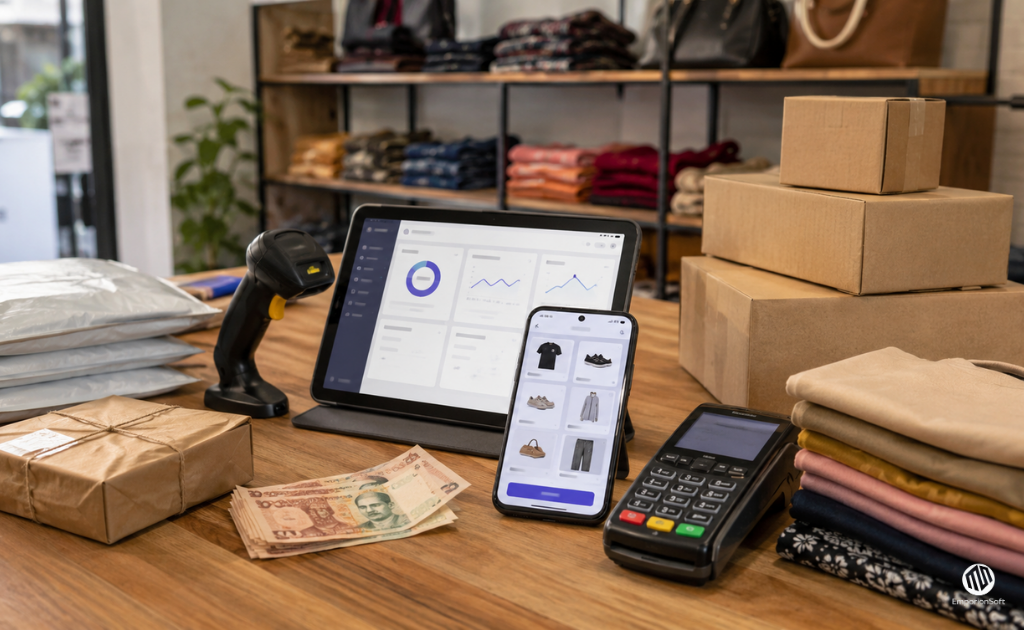
A small apparel brand in Lahore may only need a strong WooCommerce store, JazzCash or easypaisa integration, a product catalogue, WhatsApp support, and cash on delivery controls. A larger retailer with multiple warehouses, store branches, supplier purchase orders, loyalty rules, and marketplace listings may need something closer to a custom ecommerce platform.
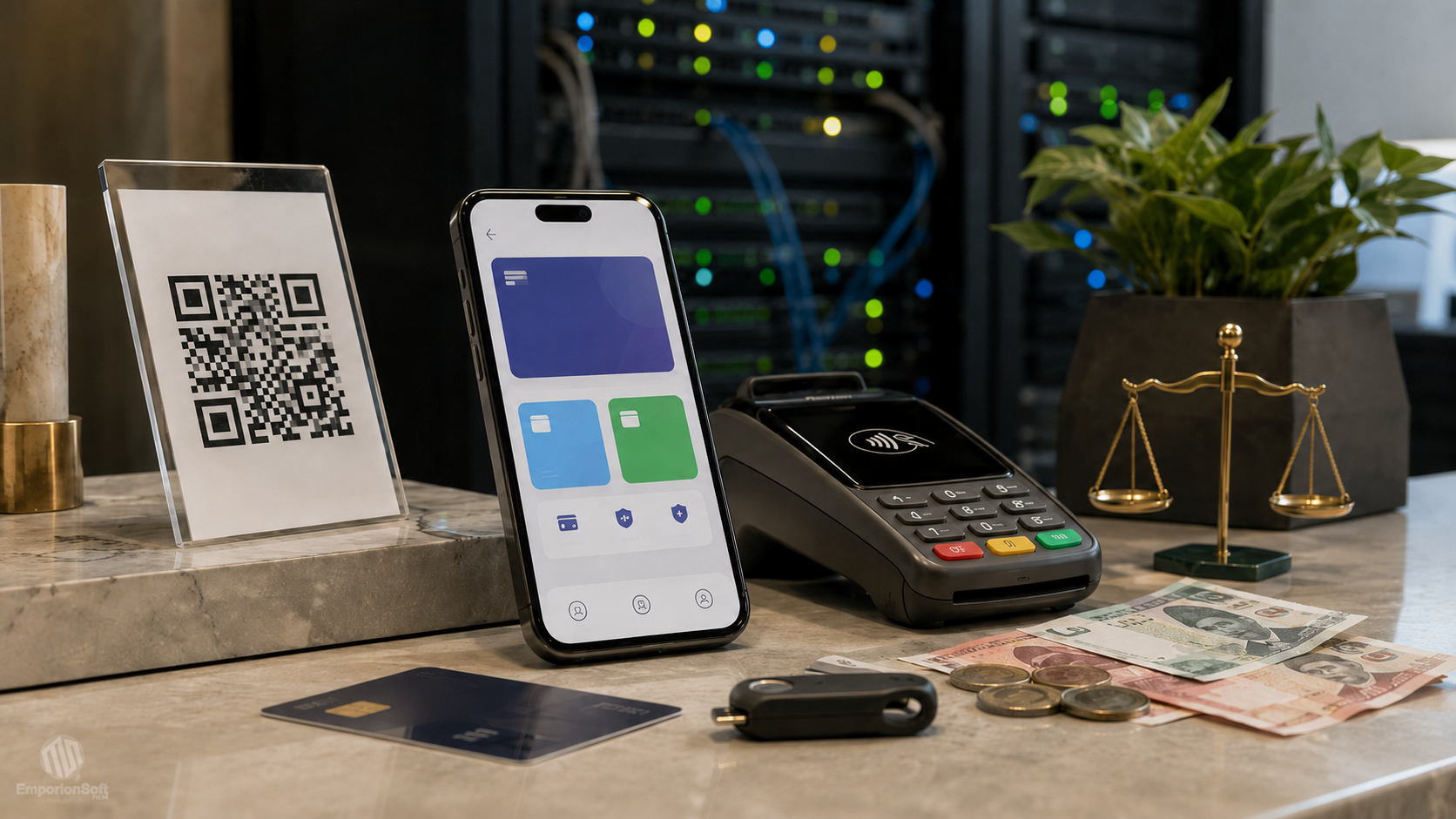
Pakistan’s digital payment environment is also changing fast. The State Bank of Pakistan Payment Systems Review for Q3 FY26 reported 3.7 billion retail payment transactions worth PKR 168.8 trillion during the quarter, with 92 percent conducted through digital channels. That matters because ecommerce stores now sit inside a wider payment behaviour shift, not outside it.
Still, local ecommerce is not only about digital payments. Many customers continue to prefer cash on delivery, especially for first time purchases, lower trust brands, and categories where product quality matters. Karandaaz identifies reducing reliance on cash on delivery as a priority for Pakistan’s ecommerce ecosystem, which confirms that COD remains a major operational factor rather than a temporary inconvenience.
This creates a specific challenge for Pakistani retailers. A store has to support both modern digital payment behaviour and the reality of COD. It needs to make online payments easy, but it also needs to prevent fake COD orders, failed delivery costs, duplicate orders, and inventory being blocked by unserious buyers.
For SMEs, this is where WooCommerce often gives a strong starting point. It works well for catalogue management, content pages, product SEO, coupon logic, simple inventory, and local payment plugins. WooCommerce describes itself as an open source commerce platform for WordPress that gives merchants control over checkout, data, and costs.
For retailers that see ecommerce as a long term channel, platform choice should connect to business model. A store selling 80 SKUs does not need the same architecture as a business managing 30,000 SKUs across multiple warehouses. A retailer doing direct customer delivery does not need the same order engine as a brand selling through website, Daraz, walk in stores, and reseller channels.
This is where many projects go wrong. Businesses compare Shopify, WooCommerce, and custom development as if they are only design options. They are not. They are operating models with different limits.
For a wider view of how Pakistan’s software market is maturing, EmporionSoft’s guide to the Pakistan IT industry in 2026 gives useful context. For retailers watching broader technology shifts, Tech trends 2026 Pakistan also connects ecommerce with automation, payments, and business software adoption.
The right ecommerce platform should reduce operational friction, not add another tool that the team struggles to maintain. The best choice is usually the one that fits today’s selling process while leaving enough room for tomorrow’s growth.
Why Pakistani retailers struggle after launching an online store
Many ecommerce projects fail after launch because the website is treated as the final product. In practice, launch is only the start. The real test begins when orders, payments, customers, couriers, stock, returns, and support all start moving at the same time.
The first common problem is weak order verification. In Pakistan, cash on delivery can increase order volume, but it can also create operational waste. Fake orders, incomplete addresses, unreachable customers, and repeated delivery attempts all increase fulfilment cost. A store that accepts COD without verification rules is not simpler. It is just exposed.
The second problem is poor inventory control. A retailer may have stock in a shop, stock at home, stock with a supplier, and stock listed on Daraz. If the ecommerce website does not reflect availability properly, customers order items that cannot be shipped. That damages trust quickly.
The third issue is unclear payment status. JazzCash, easypaisa, bank transfer, card payment, and COD all create different confirmation paths. If the admin panel only shows “pending” or “processing” without enough context, the team starts checking screenshots manually. That is not ecommerce operations. That is manual bookkeeping hidden behind a website.
The fourth issue is weak customer communication. Pakistani customers often expect confirmation through SMS, WhatsApp, phone call, or email. If the system does not send timely updates, customers contact support repeatedly. The result is avoidable pressure on staff.
This is why customer journey design matters. The buyer journey starts before checkout and continues through confirmation, dispatch, delivery, exchange, refund, and repeat purchase. EmporionSoft’s guide to customer journey mapping for small business is useful here because ecommerce conversion depends on the whole journey, not only the cart page.
Trust signals also influence purchase behaviour. Clear product photos, return policy, delivery timelines, contact details, payment options, customer reviews, and secure checkout all reduce hesitation. The website trust signals checklist can support this part of an ecommerce build, especially for newer brands that do not yet have strong market recognition.
The fifth issue is content localisation. Some Pakistani retailers need English only. Others need Urdu, Roman Urdu, or bilingual category and product pages. This is especially important in categories where customers ask practical questions before ordering, such as clothing sizes, cosmetics usage, electronics compatibility, household items, and food products.
The sixth issue is reporting. Owners usually want simple answers: which products sold, which city ordered most, which courier failed most, how much COD is pending, which items are low in stock, and which marketing channel brings paying customers. If the platform cannot answer these questions, the business keeps guessing.
These problems do not mean every retailer needs custom software. They mean the ecommerce platform must be chosen with operations in mind.
WooCommerce can handle many of these requirements when configured properly. Shopify can also work well where speed, hosted infrastructure, and a simpler admin experience matter more than deep local customisation. Custom ecommerce becomes relevant when the operating logic becomes too specific for plugins and standard platform rules.
The safest approach is to map the retail workflow before choosing the platform. That includes:
- Product catalogue structure
- Payment methods
- COD verification process
- Inventory sources
- Courier and fulfilment process
- Returns and exchange policy
- Admin roles and permissions
- Reporting requirements
Once this workflow is clear, the platform decision becomes easier. Without it, the business risks buying a polished storefront that cannot support daily operations.
Is WooCommerce or Shopify better for Pakistan in 2026?
WooCommerce is usually better for Pakistani retailers that need ownership, local payment plugin flexibility, WordPress content control, PKR first operations, and custom COD workflows. Shopify is better when the retailer wants a hosted platform, faster setup, simpler admin controls, and fewer technical maintenance decisions.
The decision should not be reduced to “Shopify is easy” and “WooCommerce is flexible”. Both statements are partly true, but they are too shallow for a serious retail business.
Shopify gives retailers a managed ecommerce environment. Hosting, core security, updates, checkout structure, and platform reliability are handled by Shopify. For a founder who wants to launch quickly and avoid server management, this can be attractive.
Shopify also supports third party payment providers. Its documentation states that merchants can use a third party provider as the sole card processor or alongside Shopify Payments where available. For payment methods that do not process automatically through an online gateway, Shopify also supports manual payment methods and lets merchants add payment instructions at checkout.
That manual payment support matters for cash on delivery, bank transfers, and other offline collection flows. But manual support does not automatically solve local operational complexity. COD verification, courier rules, partial payments, order edits, and settlement tracking may still need apps, process discipline, or custom integration.
WooCommerce works differently. It sits on WordPress and gives the store owner more control over hosting, plugins, checkout behaviour, content structure, and custom development. The official WordPress plugin directory describes WooCommerce as an open source ecommerce platform for WordPress, with ownership of store content and data as a key benefit.
For Pakistan, this openness has practical value. JazzCash lists WooCommerce and WordPress among its available online payment gateway plugins, and easypaisa lists WordPress and WooCommerce among its plugin options as well. That does not remove the need for proper merchant onboarding, testing, and compliance review, but it does make WooCommerce a natural fit for many local payment gateway projects.
| Decision factor | WooCommerce | Shopify |
|---|---|---|
| Setup speed | Fast with an experienced WordPress team | Usually faster for standard stores |
| Ownership | Strong control over code, hosting, data, and plugins | Platform managed, less infrastructure control |
| Local payment plugins | Strong fit for JazzCash and easypaisa plugin based flows | Depends on available providers, apps, and manual methods |
| COD customisation | Flexible with plugins or custom code | Possible, but deeper custom logic can need workarounds |
| Content and SEO | Strong for content heavy stores | Good, but less WordPress native |
| Maintenance | Requires updates, hosting care, backups, security checks | Platform handles much of the core maintenance |
| Custom workflows | Strong flexibility | More constrained unless using apps, APIs, or higher platform capabilities |
| Long term complexity | Can scale with disciplined engineering | Works well until local edge cases become too specific |
The better choice depends on the retailer’s constraints.
Choose Shopify when the business needs a clean store quickly, has limited custom workflow needs, accepts the platform’s structure, and prefers a managed system over technical ownership.
Choose WooCommerce when the retailer needs more control, better WordPress integration, local payment plugin flexibility, custom checkout fields, Urdu content options, and cost control over the long term.
Choose neither as the final answer if the business model already requires multi vendor seller management, advanced fulfilment, complex pricing, ERP integration, custom mobile apps, or deep marketplace automation. In that case, a custom ecommerce platform may be the better long term path.
For retailers comparing WordPress based approaches, EmporionSoft’s Headless CMS vs WordPress guide helps explain when traditional WordPress is enough and when a more decoupled architecture becomes useful. For payment strategy, the payment gateways comparison can support a broader gateway evaluation before implementation.
The practical verdict is simple. Shopify is convenient. WooCommerce is adaptable. Custom ecommerce is controlled. Pakistani retailers should choose based on workflow fit, not platform popularity.
When WooCommerce development Pakistan is the practical choice
WooCommerce development Pakistan is the practical choice when a retailer needs a flexible online store without the cost and build time of a fully custom platform. It is especially useful for SMEs that sell a manageable product catalogue, need local payment gateway integration, and want strong control over content, SEO, and checkout behaviour.
A typical WooCommerce fit looks like this: a clothing brand, cosmetics seller, electronics shop, pharmacy adjacent retailer, home decor brand, sports shop, book store, or specialty food business with clear SKUs and direct customer orders.
These businesses usually need:
- Product categories and filters
- PKR pricing
- Discount codes and bundles
- JazzCash or easypaisa payments
- Cash on delivery
- WhatsApp contact points
- Basic inventory management
- Order status updates
- Admin staff access
- SEO friendly content pages
WooCommerce handles this structure well because it combines ecommerce and content management. A retailer can publish category guides, product education pages, buying guides, return policy pages, and local landing pages from the same WordPress environment.
That matters in Pakistan because many buying decisions still need explanation. A customer may search for fabric quality, product size, delivery area, payment method, warranty, exchange terms, or brand authenticity before ordering. Content can reduce support workload and improve search visibility.
WooCommerce also works well when the business wants more control over checkout. Pakistani ecommerce often needs fields that standard global checkout flows do not prioritise, such as detailed address instructions, nearest landmark, preferred contact method, WhatsApp number, city based delivery charges, or COD confirmation status.
For payment gateways, WooCommerce has a clear local advantage because JazzCash and easypaisa both list WooCommerce or WordPress plugin support on their official gateway pages. Retailers should still confirm current documentation, onboarding requirements, settlement timelines, and technical setup directly with the provider before going live. Payment and compliance details can change, and regulated matters should be checked with the relevant professional or provider.
WooCommerce is also suitable when budget matters. A retailer can launch a serious store without building every component from scratch. The key is not to overload the website with poor quality plugins. Too many plugins can slow performance, create security risk, and make updates harder.
A strong WooCommerce build should include:
- Clean theme or custom frontend implementation
- Lightweight plugin selection
- Secure hosting and SSL
- Payment gateway testing
- COD workflow design
- Product import structure
- Backup and update process
- Analytics and conversion tracking
- Basic technical SEO
- Admin training
EmporionSoft’s website development cost Pakistan 2026 guide can support this cost discussion because WooCommerce pricing is often misunderstood. The software may be open source, but a production store still needs planning, design, development, hosting, QA, maintenance, and support.
Retailers also need local search visibility. A business selling in Lahore, Karachi, Islamabad, Rawalpindi, Faisalabad, or Multan may benefit from local landing pages, location based content, Google Business Profile alignment, and structured product information. EmporionSoft’s local SEO Pakistan tech guide can help connect ecommerce with location based discovery.
WooCommerce is not perfect. It needs maintenance. It can become messy when plugins conflict. It can slow down if hosting and database performance are ignored. It can also become difficult if the business keeps adding custom logic without a clear architecture.
But for many Pakistani SMEs, WooCommerce offers the best balance of speed, ownership, payment flexibility, content control, and cost. It is not the cheapest possible option if built properly. It is often the most sensible first serious ecommerce system.
When custom ecommerce platform Pakistan becomes worth the investment
A custom ecommerce platform Pakistan becomes worth considering when the store is no longer just a store. It becomes a business operating system with rules that standard platforms cannot handle cleanly.
This usually happens when the retailer grows beyond simple product listing and checkout. The business may need multiple warehouses, branch stock, live courier status, purchase order workflows, reseller pricing, loyalty points, customer credit, custom returns, mobile apps, or B2B ordering.
At that point, forcing everything into plugins can become more expensive than building properly. The cost is not only development cost. The hidden cost is operational friction.
Custom ecommerce makes sense when the business has requirements such as:
- Multiple warehouses with stock allocation rules
- Branch level inventory and store pickup
- Advanced product variants and bundles
- Custom pricing by customer type
- B2B ordering portals
- Seller or vendor dashboards
- Courier API integration
- ERP or accounting integration
- Daraz or marketplace sync
- Mobile app backend requirements
- Loyalty, wallet, or reward systems
- Role based admin workflows
A custom build allows the business to design the database, APIs, admin panels, customer portal, order engine, and reporting around its actual operating model. That level of control is difficult to achieve cleanly when the business depends on many unrelated plugins.
Custom ecommerce also matters when the company wants long term product ownership. A retailer may want to build customer accounts, purchase history, personalisation, subscription ordering, wholesale logic, vendor commissions, or AI based product recommendations. These features work best when the underlying data model is designed intentionally.
That does not mean every growing retailer should immediately build custom software. Custom development requires a larger budget, stronger product planning, ongoing maintenance, proper QA, DevOps, and a clear roadmap. Without that discipline, a custom ecommerce platform can become more expensive and less reliable than WooCommerce or Shopify.
The decision should be made through business logic, not ego. A retailer should move toward custom development when the cost of platform limitations becomes higher than the cost of building and maintaining a tailored system.
For example, a fashion retailer with high COD volume may start on WooCommerce. Later, it may need automated address validation, city wise courier assignment, delivery attempt tracking, exchange management, and stock reservation logic. If plugins cannot handle this reliably, a custom order management layer may become necessary.
A grocery retailer may need time slots, substitutions, rider assignment, expiry tracking, and local branch fulfilment. That is not a normal ecommerce catalogue problem. It is operations software.
A B2B distributor may need dealer pricing, credit limits, invoice based ordering, partial fulfilment, and sales team approvals. A standard online store can display products, but it may not support the commercial rules behind the business.
EmporionSoft’s custom software development cost Pakistan guide is relevant here because the cost of custom ecommerce depends on architecture, workflows, integrations, and maintenance expectations. The scalable APIs SaaS guide also supports the backend side of this decision, especially when ecommerce needs to connect with mobile apps, admin panels, marketplaces, and third party systems.
The smartest path is sometimes hybrid. A retailer can use WooCommerce for frontend commerce and build custom middleware for inventory, courier integration, or reporting. Another retailer may use Shopify for the storefront and connect a custom backend for fulfilment logic. A third may build a fully custom ecommerce system from the start because the business model is already too specialised.
Custom ecommerce is not automatically better. It is better when the business needs control that platforms cannot provide without fragile workarounds.
Online store development Pakistan cost depends on complexity, not page count
Online store development Pakistan cost depends less on how many pages the website has and more on how much business logic the system needs to handle. A five page ecommerce site with complex payments, inventory, courier rules, and reporting can cost more than a larger catalogue site with simple operations.
The most expensive parts of ecommerce are rarely the visible pages. Product listing, product detail, cart, checkout, and account screens are only the surface. The deeper cost sits in payment flows, admin workflows, integrations, testing, data migration, and ongoing support.
For a Pakistani retailer, cost usually depends on these factors:
- Platform choice
- Design customisation
- Number of products and variants
- Product import complexity
- Payment gateway integration
- COD workflow design
- Courier and delivery logic
- Inventory management
- Admin roles and permissions
- Reporting dashboard
- SEO and content structure
- Maintenance and hosting
A basic WooCommerce store can be affordable if it uses a clean theme, limited plugins, standard checkout, and simple payment setup. A more serious WooCommerce build costs more when it includes custom UI, gateway testing, speed optimisation, advanced filters, product migration, bilingual content, and custom admin workflows.
Shopify cost has a different shape. Setup may be simpler, but the business pays subscription costs, theme or app costs, and possible charges connected to apps or payment structures. The benefit is that hosting and core platform management are handled by Shopify.
Custom ecommerce has the highest upfront cost because the team builds the system around the business. That can include custom frontend, backend, database, admin panel, order engine, payment integration, customer portal, notification system, and reporting. It also needs continuous engineering support.
A practical cost comparison should look at total ownership, not launch price.
| Cost area | WooCommerce | Shopify | Custom ecommerce |
|---|---|---|---|
| Initial launch | Low to medium | Low to medium | Medium to high |
| Hosting | Merchant controlled | Included in platform | Merchant controlled |
| Local payment setup | Strong plugin route where supported | Depends on providers, apps, or manual setup | Fully tailored integration |
| Custom workflows | Medium to high flexibility | Limited unless using apps or APIs | Highest flexibility |
| Maintenance | Required regularly | Lower technical burden | Required continuously |
| Long term ownership | Strong | Platform dependent | Strongest |
| Best fit | SMEs and content led stores | Fast managed launches | Complex retail operations |
The budget should also include post launch work. Ecommerce stores need plugin updates, dependency updates, performance checks, security monitoring, backups, checkout testing, payment issue handling, and small UX improvements. EmporionSoft’s guide to app maintenance costs explains why ongoing support is not optional for live software.
Retailers should also measure return, not only cost. A cheaper store that loses orders through slow checkout, weak trust signals, poor tracking, or payment errors can be more expensive than a stronger build. The tech ROI metrics guide is useful for framing ecommerce investment around conversion, repeat purchase, operational savings, and reduced manual work.
For ecommerce website Pakistan PKR budgeting, owners should separate spending into phases:
- Discovery and workflow mapping
- Store design and development
- Payment and delivery setup
- Product data preparation
- QA and testing
- Launch support
- Monthly maintenance
- Growth improvements
This gives better control than asking for one vague “complete ecommerce website” price. It also helps the retailer decide which features belong in version one and which can wait.
The right budget is the one that matches commercial risk. A small retailer should avoid overbuilding. A serious retail operation should avoid underbuilding. Both mistakes waste money.
How to design payments, COD, inventory, and Daraz style workflows properly
The success of an ecommerce website Pakistan PKR project depends heavily on execution. A store can look polished and still fail if payments, COD, inventory, and delivery workflows are not designed properly.
Start with payment methods. Pakistani stores commonly need a mix of JazzCash, easypaisa, bank transfer, card payment, and cash on delivery. Each method should have a clear order state, customer instruction, admin view, and reconciliation process.
JazzCash states that its online payment gateway supports plugin integration options including WooCommerce and WordPress. easypaisa also lists WordPress and WooCommerce among its gateway plugin options. These official pages support the practical point that WooCommerce is often a natural route for local wallet gateway integration, but merchants still need direct onboarding, credentials, sandbox testing, and provider confirmation before going live.
A payment flow should answer these questions:
- Has the customer selected payment or completed payment?
- Has the gateway confirmed the transaction?
- Was the amount correct?
- Was the order updated automatically?
- Can the admin reconcile payment against settlement?
- What happens if the customer pays but the order status does not update?
- Who can manually override a payment status?
- Is every override logged?
COD needs its own design. It should not be treated as just another checkbox at checkout. A reliable COD workflow should include order verification, duplicate order detection, blocked customer rules, address quality checks, city wise delivery availability, and courier status tracking.
For higher risk COD categories, the retailer may require phone confirmation before dispatch. For repeat customers, the system may allow faster processing. For high value items, the store may ask for partial advance payment. These rules should be defined in the platform instead of left entirely to staff memory.
Inventory is the next critical layer. A simple store can use standard stock counts. A more serious retailer needs stock reservation rules. If a COD order is placed but not verified, should stock be reserved? For how long? What happens if payment fails? What happens if a product is returned but damaged?
These decisions affect revenue. Poor inventory logic can create overselling, dead stock, customer complaints, and unnecessary refunds.
Daraz style workflow requirements add another layer. Some retailers sell on their own website and on marketplaces. They may need product import, SKU matching, stock sync, order export, dispatch labels, return status, and marketplace reporting. Full Daraz seller software integration Pakistan may need custom development or middleware, depending on the exact marketplace tools and available APIs.
A practical ecommerce workflow should separate the order lifecycle into clear states:
- Order received
- Payment pending
- Payment confirmed
- COD verification pending
- Verified
- Packed
- Dispatched
- Out for delivery
- Delivered
- Returned
- Cancelled
- Refunded
Each state should trigger the right admin action and customer message. That message may be email, SMS, WhatsApp, or dashboard notification, depending on the business.
Testing is essential. Payment gateway flows, failed payments, duplicate callbacks, COD cancellation, stock changes, coupon usage, delivery charges, and refund states should be tested before launch. EmporionSoft’s QA testing Pakistan guide supports this point because ecommerce defects directly affect revenue and customer trust.
Deployment also matters. A store should not break during sales campaigns, product drops, or peak order hours. The zero downtime deployment guide is relevant for retailers that cannot afford checkout failure during live trading.
The technical build should also protect admin operations. Every staff member should not have full access. Roles should separate product management, order processing, finance, support, and reporting where possible. Manual payment edits and refund actions should be restricted and logged.
A mature ecommerce system is not only a storefront. It is a controlled transaction environment. The better the workflow design, the less the business depends on manual correction.
A decision framework for Pakistani retailers choosing WooCommerce, Shopify, or custom
The best ecommerce platform is the one that fits the retailer’s current operating model while leaving enough room for the next stage of growth. WooCommerce, Shopify, and custom ecommerce can all be good choices. They become bad choices when selected for the wrong reasons.
Use this decision framework before committing.
Choose WooCommerce if control and local flexibility matter
WooCommerce is the best default option for many Pakistani SMEs. It works well when the business wants ownership, WordPress content control, local payment gateway options, custom checkout fields, SEO pages, COD logic, and manageable development cost.
Choose WooCommerce when:
- You want to sell in PKR
- You need JazzCash or easypaisa plugin based integration
- You want WordPress content and ecommerce together
- You need custom checkout fields
- You need COD support with some workflow control
- You have a moderate catalogue
- You want strong ownership of hosting and data
- You can maintain updates, backups, and security
WooCommerce is not a shortcut around professional development. A weak WooCommerce store can be slow, insecure, and hard to manage. A strong WooCommerce store needs good hosting, clean plugin selection, payment testing, performance work, and maintenance discipline.
Choose Shopify if speed and managed infrastructure matter
Shopify is a strong option when the retailer wants to launch quickly and avoid much of the technical maintenance that comes with self hosted systems. It can be suitable for standard stores with straightforward catalogue, checkout, and fulfilment needs.
Choose Shopify when:
- You want a managed platform
- You prefer simpler admin operations
- You do not need deep checkout customisation
- Your payment and COD needs fit available methods
- You are comfortable with platform subscription and app costs
- You want to avoid hosting management
- Your store workflow is standard enough for Shopify’s structure
Shopify can become limiting when the business needs highly specific local workflows, deep backend control, or custom logic that does not fit cleanly into apps and platform rules.
Choose custom ecommerce if operations are the product
Custom ecommerce makes sense when the store is part of a larger retail system. This is usually true for businesses with multiple warehouses, branches, sales teams, supplier workflows, seller portals, B2B customers, custom pricing, delivery automation, or marketplace sync.
Choose custom ecommerce when:
- Your workflows are too specific for plugins
- You need complete control over order logic
- You need custom inventory and warehouse rules
- You need integrations with ERP, CRM, POS, or accounting
- You need mobile apps connected to the same backend
- You need seller, vendor, or reseller portals
- You need advanced analytics and reporting
- You have the budget and team discipline for ongoing software ownership
A custom build should be approached carefully. The retailer needs product planning, technical architecture, QA, documentation, hosting, security, and support. Without that, custom development can become a burden.
Use a hybrid path when growth is uncertain
Many Pakistani retailers do not need to choose the final system on day one. A hybrid path can reduce risk.
A retailer may start with WooCommerce, validate product demand, improve COD operations, collect customer data, and then build custom modules later. Another retailer may use Shopify for storefront speed while connecting external tools for inventory or fulfilment. A larger company may build a custom backend first and connect multiple sales channels over time.
The right roadmap depends on maturity.
| Retailer stage | Best starting point | Reason |
|---|---|---|
| New brand testing demand | WooCommerce or Shopify | Fast launch and controlled cost |
| SME with catalogue and COD | WooCommerce | Local payment and workflow flexibility |
| Content led retail brand | WooCommerce | Strong product SEO and buying guides |
| Simple D2C brand with standard operations | Shopify | Managed infrastructure and fast admin workflow |
| Multi branch retailer | Custom or hybrid | Inventory and fulfilment complexity |
| B2B distributor | Custom | Pricing, approvals, credit, and account workflows |
| Marketplace connected seller | Hybrid or custom | Sync, reporting, and stock control needs |
The central lesson is clear. Do not choose a platform from a feature checklist alone. Choose it from the operating reality of the business.
For retailers that need help comparing platforms, planning integrations, or mapping ecommerce workflows before development, EmporionSoft can support the decision through its software development services and consultation process. The useful starting point is not a sales call about technology. It is a clear discussion about how the business sells, collects, fulfils, and grows.
Is WooCommerce or Shopify better for Pakistan?
WooCommerce is usually better when the retailer needs local payment gateway flexibility, WordPress content control, custom checkout fields, and stronger ownership. Shopify is better when the store has standard workflows and the owner wants a hosted platform with simpler maintenance. The right choice depends on payments, COD, inventory, and customisation needs.
How do I accept JazzCash payments on an ecommerce website in Pakistan?
Retailers usually need a JazzCash merchant account, gateway onboarding, integration credentials, plugin or API setup, sandbox testing, and live transaction verification. JazzCash lists WooCommerce and WordPress among available plugin options, but merchants should confirm current technical and compliance requirements directly with JazzCash before launch.
What does an ecommerce website cost in Pakistan?
The cost depends on platform, design, product catalogue size, payment gateway setup, COD logic, courier integration, inventory rules, reporting, and maintenance. A basic WooCommerce store costs less than a custom platform, but serious ecommerce budgeting should include QA, hosting, support, security, and post launch improvements.
Should I build custom ecommerce or use a platform?
Use WooCommerce or Shopify if your store has standard product, payment, and fulfilment needs. Build custom ecommerce when your business depends on complex inventory, multiple warehouses, B2B pricing, seller portals, courier automation, or deep integrations. Custom development is worth it when platform limitations start creating operational cost.
Can a Pakistani retailer connect Daraz selling with its own ecommerce website?
Yes, but the right approach depends on the available marketplace tools, data access, SKU structure, and operational goals. Some retailers only need manual product and order management. Others need custom middleware for stock sync, order export, reporting, and reconciliation across website, warehouse, and marketplace channels.